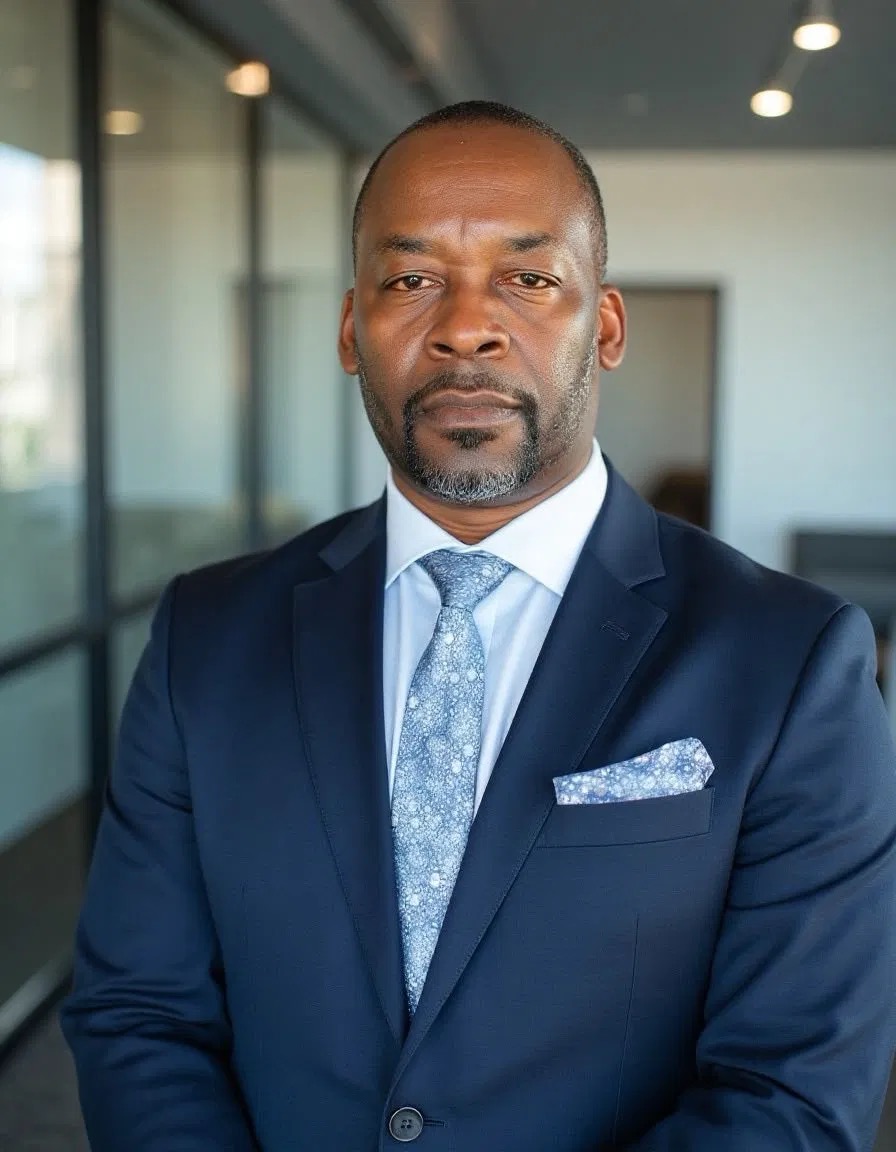
At a Glance
| Member | Brian Swinton · Starter |
| Role | Funding Consultant, SCB Innovative Solutions — real estate capital brokerage, St. Petersburg, FL, operating nationwide |
| Specialties | Hard money · DSCR rental loans · fix & flip · bridge · multifamily · ground-up construction · business & working capital |
| Network | 293+ lender relationships · all 50 states · no upfront fees (success-based, paid at closing) |
| Reach him | (904) 747-9381 · scbinnovativesolutions.com |
| A great day | A birdie and a fish — same day. That's the whole scorecard. |
You found the deal. The numbers work. The seller wants to close in 10 days.
Then you call your bank.
"We'll need 60 to 90 days. W-2s from the last two years. Tax returns. A debt-to-income analysis on your personal income. Oh, and the property needs to be owner-occupied."
The deal dies. Not because you lacked the capital. Because you went to the wrong source.
Real estate investors who build portfolios — real portfolios — don't use conventional banks for investment properties. They use private lenders, hard money loans, DSCR financing, and capital brokers who can match the right funding to the right deal inside of a week. This guide explains exactly how each loan type works, who it's for, and why working with a capital broker who has relationships with over 293 lenders changes the math entirely.
What Is a Hard Money Loan? (And Why Investors Prefer It to a Bank)
A hard money loan is a short-term, asset-based loan for real estate investors. Instead of underwriting your W-2 income or debt-to-income ratio, the lender underwrites the property — specifically its value after repairs, known as the After-Repair Value (ARV).
Hard money loans are designed to be fast. Where a bank takes 60 to 90 days, a hard money lender can fund in 7 to 14 days. For investors competing in active markets — against cash buyers, other investors, and wholesale networks — that speed is the difference between closing the deal and losing it to someone faster.
Hard money loans are best for:
- Fix and flip investors buying distressed properties
- Auction purchases requiring same-week closes
- Properties in poor condition that DSCR lenders won't touch
- Acquisitions where the borrower's income doesn't tell the full story
Interest rates are higher than conventional mortgages — typically 9% to 13% — but the loan term is short (6 to 24 months), and the structure is interest-only. The cost is the price of accessing a deal that a bank would never approve.
Fix and Flip Loans: Finance the Purchase and the Rehab Together
A fix and flip loan is a specific type of hard money financing structured for investors who buy, renovate, and sell residential properties for profit. The loan covers both the acquisition cost and the renovation budget, disbursed through a draw schedule as work is completed.
Lenders underwrite fix and flip loans primarily against the ARV — what the property will be worth once renovated. This allows investors to maximize leverage on deals that look underwater at purchase but have strong upside after improvements. A property purchased at $175,000 with a $60,000 rehab budget and an ARV of $320,000 is exactly the kind of deal these loans are designed for.
Fix and flip investors who build a track record of completed projects gain access to better terms, higher loan-to-value ratios, and faster approvals over time. The loan is a business tool, not a mortgage.
DSCR Loans: Build a Rental Portfolio Without Ever Showing a W-2
The DSCR loan — Debt Service Coverage Ratio loan — is the most important financing innovation for buy-and-hold real estate investors in the last decade.
Here is how it works: instead of qualifying based on your personal income, the lender qualifies based on the rental income the property generates. If the property earns enough monthly rent to cover the mortgage payment, the loan qualifies. Your tax returns don't matter. Your employment status doesn't matter. A self-employed investor with 12 LLCs qualifies the same way a W-2 employee does — through the property's income, not their own.
A DSCR of 1.0 or higher means the property covers its own debt. Most lenders look for 1.20 or higher.
DSCR loans are 30-year amortized, fixed rate, and designed for long-term holds. They're the permanent financing tool that replaces expensive hard money once a property is stabilized and rented. Investors running the BRRRR strategy — Buy, Rehab, Rent, Refinance, Repeat — use hard money for the acquisition and rehab, then refinance into a DSCR loan once the property is cash-flowing. Each cycle returns capital that funds the next deal.
DSCR loans are best for:
- Single-family rentals
- Small multifamily (2 to 4 units)
- Short-term rentals (Airbnb, VRBO) where STR income is used for qualification
- Portfolio expansion without income documentation
- Self-employed investors, real estate professionals, and LLC-structured portfolios
Cash-Out Refinances on Investment Properties: Pull Equity Without Selling
One of the most underused tools in a real estate investor's capital stack is the cash-out refinance on an investment property.
If you own a rental that has appreciated — or that you bought below market, improved, and stabilized — there is likely equity sitting idle in that asset. A cash-out refinance pulls that equity out as cash while leaving the property in your portfolio, still generating rental income.
For a landlord who bought a property at $200,000 that is now worth $340,000 and carries a $160,000 loan balance, a 75% LTV cash-out refinance delivers roughly $95,000 at closing. That capital goes directly into the next acquisition.
This is how active investors recycle capital without triggering a taxable sale. The equity works twice — once as appreciation, and again as deployed capital on a new deal.
Bridge Loans: Close Fast, Refinance Later
A bridge loan is short-term financing that bridges the gap between where a deal is today and where it's going. Investors use bridge loans when they need to close quickly before permanent financing is in place, when they're acquiring a property that isn't yet stable enough for DSCR qualification, or when they need to move on a new acquisition before an existing property sells or refinances.
Bridge loans are typically 6 to 18 months, interest-only, and asset-based. Like hard money, they underwrite the deal, not the borrower's personal finances. The exit strategy — refinance into DSCR, sell the property, or take out another loan — is the most important factor in approval.
Speed is the defining feature. A bridge loan can often close in under two weeks.
Multifamily Loans: 5+ Unit Properties Require a Different Capital Stack
Once you move above four units, you are in commercial territory. Conventional residential mortgages don't apply. Multifamily loans for 5+ unit properties are underwritten differently — based on the net operating income (NOI) of the property, the cap rate, and the debt service coverage ratio at the asset level.
This is where having access to a broad lender network matters most. Not every lender touches small and midsize apartment buildings. Those that do have varying appetites by property type, unit count, occupancy rate, market, and borrower experience. Matching a 12-unit apartment acquisition in a tertiary market to the right lender is not something you can do efficiently by cold-calling lenders yourself.
SCB Innovative Solutions structures multifamily financing across the full spectrum — acquisition, value-add bridge, and long-term permanent financing for stabilized apartment properties.
Ground-Up Construction Loans: Finance the Build From Foundation to Certificate of Occupancy
Ground-up construction loans are draw-based financing for real estate developers and investors building from scratch. These loans fund both the land (or lot) and the construction costs, disbursed in phases as construction milestones are reached and verified.
Construction lending is complex and lender-specific. Underwriting depends on the borrower's experience, the contractor's track record, the local market, the project budget, and the exit strategy. Not every private lender participates in construction lending — and among those who do, terms vary significantly.
The investors who successfully access construction financing have a clean project plan, a proven contractor relationship, and a clear exit (sell at certificate of occupancy or refinance into a permanent DSCR loan). SCB structures ground-up deals for residential builders and developers who are expanding beyond fix and flip into end-to-end development.
Business and Working Capital for Real Estate Operators
Beyond property-specific loans, many real estate investors and operators need business and working capital tied to their enterprise performance — not individual deals. Acquisition pipelines, marketing spend, contractor relationships, and overhead all require capital that moves at business speed.
SCB structures business and working capital solutions for real estate operators whose funding needs live at the company level rather than the property level.
The Broker Advantage: 293 Lenders vs. One
Most investors know there are private lenders out there. What they don't know is how to navigate them.
Every lender has a sweet spot — a preferred deal type, geography, credit tier, property type, or loan size. A lender who loves fix and flip in the Southeast may have no appetite for a multifamily bridge in the Midwest. A DSCR lender who finances short-term rentals aggressively may decline a property in a market they don't know.
Going lender to lender yourself is slow, repetitive, and opaque. You submit the same package multiple times. You get inconsistent pricing. You don't know which lender's guidelines your deal actually fits until you're already in underwriting.
SCB Innovative Solutions solves this at the front end.
With over 293 lender relationships, SCB matches each file to the right capital source before submission — by deal type, geography, credit profile, property type, and timeline. The borrower submits one package. SCB pre-screens it and places it with the lender whose program it fits.
The result: faster approvals, cleaner files going in, and more options than any borrower could independently source. Lenders that won't market directly to borrowers — private funds, family offices, institutional capital — are accessible through a brokerage relationship.
And the fee structure reflects this: success-based only. SCB earns a broker fee of 1% to 3% of the loan amount, collected at closing. There is no upfront cost to the borrower for loan placement. You don't pay unless the deal funds.
Meet Your Funding Consultant: Brian Swinton
Most lenders hand you a portal and a checklist. SCB gives you Brian Swinton.
Brian is SCB's Funding Consultant — and the kind of resource most investors don't realize they're missing until they've already wasted time on deals that didn't have to fall apart. With hundreds of closed transactions across fix and flip, DSCR, multifamily, bridge, and construction financing, Brian has seen virtually every deal scenario the market can produce. The difficult ones. The creative ones. The ones where the borrower had great credit but a non-traditional income structure. The ones where the timeline was six days and there was no margin for error.
That experience matters because real estate deals don't come with instruction manuals. Every file has nuance — a credit event, a unique property type, a market that only certain lenders understand, a timeline that rules out 90% of the options before you even start. Brian's job is to read those nuances before submission and route the deal to the lender most likely to approve it cleanly, on time, and at competitive terms.
From first contact through closing, Brian walks alongside you. He reviews the deal, identifies the right loan structure, matches you to the appropriate lender inside SCB's 293-lender network, prepares a clean file, and manages the process so you can stay focused on what you do — finding and executing deals.
This is not a call center. This is not a web form with a 3-day callback window. Brian is a working professional in the capital markets space who treats your deal with the urgency it deserves.
When you reach out to SCB, you're reaching Brian. And Brian has done this hundreds of times.
Off the clock, Brian keeps two loves: golf and fishing. Ask him what a perfect day looks like and the answer has nothing to do with basis points — make a birdie and catch a fish in the same day, and the day's a win. It's the same instinct he brings to your deal: patience, read the conditions, and strike when it counts. That's the kind of builder The Country C1ub was made for — and why Brian is one of its members.
Who SCB Works With
SCB Innovative Solutions is not a first-time homebuyer resource. The borrowers who work best with SCB are:
- House flippers buying their second through tenth property and needing capital in days, not months
- Landlords building single-family or small multifamily rental portfolios and scaling through DSCR financing
- Short-term rental operators financing Airbnb and VRBO properties under an LLC
- Developers financing ground-up residential construction projects
- Real estate operators needing working capital tied to their business performance
These borrowers share a common profile: they are not served well by conventional banks. Their income is non-traditional. Their deals move faster than bank timelines. Their properties are non-owner-occupied. And they need a capital partner who understands investment real estate — not a loan officer who only does primary residence mortgages.
Frequently Asked Questions
What is the difference between a hard money loan and a DSCR loan?
A hard money loan is short-term (6 to 24 months), used for acquisition and rehab, and underwritten based on the property's After-Repair Value. A DSCR loan is long-term (30 years), used for stabilized rental properties, and underwritten based on the property's rental income. Investors running the BRRRR strategy use hard money first, then refinance into a DSCR loan once the property is rented and cash-flowing.
Do I need good credit to get a hard money loan?
Credit requirements vary by lender and loan type. Hard money lenders are primarily asset-based — the property's value and your exit strategy matter more than your credit score. That said, stronger credit typically unlocks better terms. DSCR loans generally require a minimum FICO of 620 to 680 depending on the program.
How fast can an investment property loan close?
Hard money and bridge loans can close in 7 to 14 days with a complete file. DSCR loans typically take 2 to 4 weeks. Ground-up construction loans require more due diligence and may take 3 to 5 weeks. SCB pre-screens files and submits to lenders ready to underwrite, which reduces unnecessary delays.
Does SCB charge upfront fees?
No. SCB earns a broker fee at closing — typically 1% to 3% of the loan amount. There is no upfront cost for loan placement. The fee is paid at closing, from loan proceeds.
Can I close in my LLC?
Yes. Most private lenders and DSCR programs allow — and many prefer — borrowing entities to be structured as LLCs or corporations. This is standard practice for investors who hold properties for liability protection.
What states does SCB finance in?
Nationwide. SCB's lender network covers all 50 states, with varying program availability by market.
What is the minimum loan amount?
This varies by lender and loan type. SCB works with loan amounts ranging from approximately $75,000 (small fix and flip) through $5 million-plus (multifamily and construction). Submit your deal and SCB will identify whether it fits within the current lender network.
The Next Step
If you're sitting on a deal that a bank won't touch — or that can't wait 60 days — SCB Innovative Solutions connects you to private capital that moves at investor speed.
Hard money loans. DSCR rental financing. Fix and flip loans. Cash-out refinances. Multifamily bridge loans. Ground-up construction. Business and working capital. Over 293 lender relationships. No upfront cost.
And when you reach out, you'll work directly with Brian Swinton — SCB's Funding Consultant with hundreds of closed deals and the expertise to structure yours the right way from day one.
SCB Innovative Solutions LLC is a real estate capital brokerage based in St. Petersburg, FL, operating nationwide. SCB is a mortgage broker, not a direct lender. Loan approvals are subject to lender underwriting, property appraisal, and credit review. Rates, terms, and program availability are subject to change.
The Country C1ub Member Spotlight Series celebrates the builders, founders, and mission-driven people who make this community what it is. Nobody achieves great things alone.